Saturday, October 24, 2009

Hajj


e Hajj (Arabic: حج‎) is the annual pilgrimage to Mecca. It is currently the largest annual pilgrimage in the world,and is the fifth pillar of Islam, an obligation that must be carried out at least once in their lifetime by every able-bodied Muslim who can afford to do so. The Hajj is a demonstration of the solidarity of the Muslim people, and their submission to God.[2] The pilgrimage occurs from the 8th to 13th day of Dhu al-Hijjah, the 12th month of the Islamic calendar. Because the Islamic calendar is a lunar calendar, eleven days shorter than the Gregorian calendar used in the Western world, the Gregorian date of the Hajj changes from year to year. In 2007, the Hajj was from December 17–21; in 2008 from December 6–10, and in 2009 will be November 25–29. Ihram is the name given to the special state in which Muslims live whilst on the pilgrimage.

The Hajj is associated with the life of the Prophet Muhammad from the 7th century, but the ritual of pilgrimage to Mecca is considered by Muslims to stretch back thousands of years to the time of Abraham. Pilgrims join processions of hundreds of thousands of people, who simultaneously converge on Mecca for the week of the Hajj, and perform a series of rituals: Each person walks counter-clockwise seven times about the Ka'bah, the cube-shaped building which acts as the Muslim direction of prayer; kisses the Black Stone in the corner of the Kaaba; runs back and forth between the hills of Al-Safa and Al-Marwah; drinks from the Zamzam Well; goes to the plains of Mount Arafat to stand in vigil; and throws stones in a ritual Stoning of the Devil. The pilgrims then shave their heads, perform a ritual of animal sacrifice, and celebrate the three day global festival of Eid al-Adha.

Zakat


Zakāh (Arabic: زكاة‎ or "alms giving", one of the Five Pillars of Islam, is the giving of a small percentage of one's possessions (surplus wealth) to charity generally to poor and needy individual. It is often compared to the system of tithing and alms, but it serves principally as the welfare contribution to poor and deprived Muslims, although others may have a rightful share. It is the duty of an Islamic community not just to collect zakat but to distribute it fairly as well.

Zakat is sometimes refers as sadaqah and its plural, sadaqat. Generally the Sharing of wealth is called zakat whereas the sadqat could be sharing of wealth as well sharing of happiness among God's creation such as saying kind words or smile at someone or take care of animals or environments etc.

Zakat or sadqah is worship in Islam a means of spiritual purification. It is not a tax burden but serves as socio-financial system of Islam by re-distributing the wealth among poor and needy.

Ramadhan


Ramadhan (Arabic: رمضان‎) is the ninth month of the Islamic calendar.
The most prominent event of this month is fasting. Every day during the month of Ramadan, Muslims around the world get up before dawn to eat Suhoor or (meaning "something we eat at Sahar"), then they perform the fajr prayer. They have to stop eating and drinking before the call for prayer starts until the fourth prayer of the day, Maghrib. Muslims break their fast at Magrib (at sunset) prayer time with a meal called Iftar. Muslims may continue to eat and drink after the sun has set until the next morning's fajr prayer call. Then the process starts all over.

Ramadhan is a time of reflecting and worshiping God. Muslims are expected to put more effort into following the teachings of Islam and to avoid obscene and irreligious sights and sounds. Sexual activities during fasting hours are also forbidden. Purity of both thoughts and actions is important. The fast is intended to be an exacting act of deep personal worship in which Muslims seek a raised awareness of closeness to God.
The act of fasting is said to redirect the heart away from worldly activities, its purpose being to cleanse the inner soul and free it from harm. It also allows Muslims to practice self-discipline, self-control, sacrifice, and empathy for those who are less fortunate; thus encouraging actions of generosity and charity.

Muslims should start observing the fasting ritual upon reaching the age of puberty, so long as they are healthy, sane and have no disabilities or illnesses. The elderly, the chronically ill, and the mentally ill are exempt from fasting, although the first two groups must endeavor to feed the poor in place of their missed fasting. Also exempt are pregnant women, women during the period of their menstruation, and women nursing their newborns.

Prayer


Ṣalāt (Arabic: صلاة‎; pl. ṣalawāt) is the name given to the formal prayer of Islam. The prayer is one of the obligatory rites of the religion, to be performed five times a day. Its supreme importance is indicated by its status as one of the Five Pillars.

The Two Sahihs (Bukhari and Muslim) recorded that Ibn `Umar said that the Messenger of Allah said, «بُنِيَ الْإِسْلَامُ عَلَى خَمْسٍ: شَهَادَةِ أَنْ لَا إِلهَ إِلَّا اللهُ وَأَنَّ مُحَمَّدًا رَسُولُ اللهِ، وَإِقَامِ الصَّلَاةِ، وَإِيتَاءِ الزَّكَاةِ، وَصَوْمِ رَمَضَانَ، وَحَجِّ الْبَيْت» (Islam is built upon five (pillars): Testifying that there is no deity worthy of worship except God and that Muhammad is the Messenger of Allah, establishing the prayer, giving Zakat, fasting Ramadan and Hajj to the House.)

Prayer is performed five times a day: at dawn (fajr), noon (dhuhr), in the afternoon (asr), at sunset (maghrib) and nightfall (isha'a)

The Islamic day begins at dawn (fajr).

The chief purpose of prayer in Islam is to act as a person's communication with God. By reciting "The Opening", the first chapter of the Qur'an, as required in all prayer, the worshipper can stand before God, thank and praise Him, and to ask for guidance along the Straight Path.

In addition, the daily prayers remind Muslims to give thanks for God's blessings and that Islam takes precedence over all other concerns, thereby revolving their life around Allah and submitting to His will. Prayer also serves as a formal method of remembering God, or dhikr.

In the Qur'an, it is written that: "The true believers are those who feel fear in their hearts when God is mentioned. And when His Revelations are recited to them, they find their faith strengthened. They do their best and then put their trust in their Lord." [Qur'an 8:2]

"To those whose hearts, when God is mentioned, are filled with fear, who show patient perseverance over their afflictions, keep up regular prayer, and spend (in charity) out of what We have bestowed upon them." [Qur'an 22:35]

Shahada


The Shahada, also spelled shahadah, (Arabic: الشهاد)from the verb šahida "to testify") is the Islamic creed. The Shahada is the Muslim declaration of belief in the oneness of God and acceptance of Muhammad as his final prophet. The declaration reads: laa ilāha illa Allāh, wa Muḥammad(un) rasūl Allāh “There is no god but God, and Muhammad is the Messenger of God. Recitation of the Shahadah is the most important of the Five Pillars of Islam for Muslims and is performed daily. People wishing to convert to Islam do so by a public recitation of the creed while pointing their index finger as shown in the photo.

Introducing Shaykh Salek bin Siddina


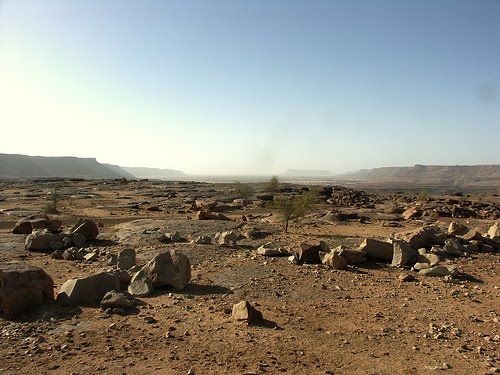
Shaykh Salek is from Mauritania, West Africa a country known for producing some of the Muslim world's most knowledgeable scholars. He studied for over 17 years in the famous mountain region of Taganat, from numerous accomplished scholars including Murabit al-Hajj, one of the greatest scholars of our age. In addition to memorizing the entire Quran in two of its recitations, he has studied and mastered some of the most advanced texts in the disciplines of Islamic jurisprudence (fiqh), arabic grammer (nahu), doctrinal creed (aqida), prophetic narration (hadith), and the study of the life of the Prophet Muhammad, peace be upon him (seerah). From a family tracing its lineage back to Jafar ibn Abi Talib, may Allah be well pleased with him, he is respected and widely regarded amongst his peers as a scholar of the highest caliber. He currently runs a school in Mauritania ,teaching the Quran,Islamic law, and numerous other subjects to children and adults of all ages.

A day with Murabit al Hajj by Hamza Yusuf


During the blessed time that I was fortunate to have lived with him in his own tent, I observed his daily routine: He would usually awake at about 2:30 or 3:00 in the morning and begin the Tahajjud or night prayers. He would often recite for a few hours, and I heard him repeat verses over and over again and weep. Just before dawn, he would sit outside his tent and recite Qur’an, and then when the first light of dawn was discernible, he would walk to the open-air mosque and call the adhan. He would then pray his nafilah and wait for a short period and then call the iqamah. During that time, I never saw anyone else lead the prayer, and he would almost always recite from the last 60th of the Qur’an as is the Sunnah for a congressional Imam to do so according to Imam Malik.

After the sun rose and reached the level of a spear above the horizon, he would pray the sunrise rak’ahs and then return to his tent where he would have some milk brought fresh from a cow. He would then teach until about 11:00 in the morning and nap for a short while. After that, students would start coming again, and he would continue to teach until about 1:00pm at which time he would measure his shadow for the time of the midday prayer. He would then call the adhan at the time his shadow reached an arm’s length past the post meridian time as is the Maliki position on the midday prayer, if performed in congregation, to allow for others to come from their work after the heat dissipates. He would always pray four rakahs before and after the midday prayer and then return to his tent where he would teach until afternoon. He would usually have a small amount of rice and yogurt drink that is common in West Africa. Then, he would measure his shadow for the afternoon prayer, and when he ascertained its time, he would proceed to the mosque and call the adhan.

After Asr, Murabit al-Hajj would return to his tent and usually resume teaching and sometimes listen to students recite their Qur’an lessons from memory and he would correct their mistakes. During any lulls in his teaching, anyone in his presence could hear him say with almost every breath, “La ilaha illa Allah,” or he would recite Qur’an. At sunset, he would go and call the adhan, pray Maghrib, and then sit in the mihrab and recite his wird until the time of the night prayer. He would call the adhan, lead the pray and return to his tent. He would usually have some milk and a little couscous and then listen to students recite Qur’an or read Qur’an by himself. At around 9:00 pm whe would admonish himself with lines of poetry form Imam Shafi’s Diwan and other well-known poets. He would often remember death with certain line that he repeated over and over again, especially the following that I heard him many times:

O my Lord, when that which there is repelling alights upon me,

And I find myself leaving this adobe

And become Your guest in a dark and lonely place,

Then make the host’s meal for his guest the removal of my wrongs.

A guest is always honored at the hands of a generous host,

And You are the Generous, the Creator, the Originiator.

Surely kings, as a way of displaying their magnanimity

Free their servants who have grown old in their service.

And I have grown old in Your service,

So free my soul from the Fire


He often repeats these lines for what seems like an eternity, his voice penetrating the hearts of all those within earshot. He once admonished me with lines of poetry, one after another, until I wanted the earth to swallow me. He said to me, “And what is man other than a comet that flashes brilliant light for a moment only to be reduced to ashes.”

He told me several times, “Hamza, this world is an ocean, and those who drown in it are untold numbers. Don’t drown.”

I have never seen anyone like him before him or after him, and I don’t think that I ever will.May Allah reward him for his service to this din and his love and concern for the Muslims. He was never known to speak ill of anyone. Once when a student was studying Khalil with him and asked what a certain word meant in the text, he explained to him that it was a slow and clumsy horse. The student then said, “like so-and-so’s horse?” At this Murabit al-Hajj suddenly became upset and said, “I don’t spend much time with people because they backbite, so if you want to study with me, you must never speak ill of anyone in my presence.” It is not well known by Muslims that to speak ill of someone’s animals falls under the ruling of backbiting.

Shaykh Murabit al-Hajj is a master of the sciences of Islam, but perhaps more wondrous than that, he has mastered his own soul. His discipline is almost angelic, and his presence is so majestic and ethereal that the one in it experiences a palpable stillness in the soul. As the Arabs says, “the one who hears is not as the one who has seen.” I was told by many people from his family that had I seen him in his youth, I would have been even more astonished at his devotional practices